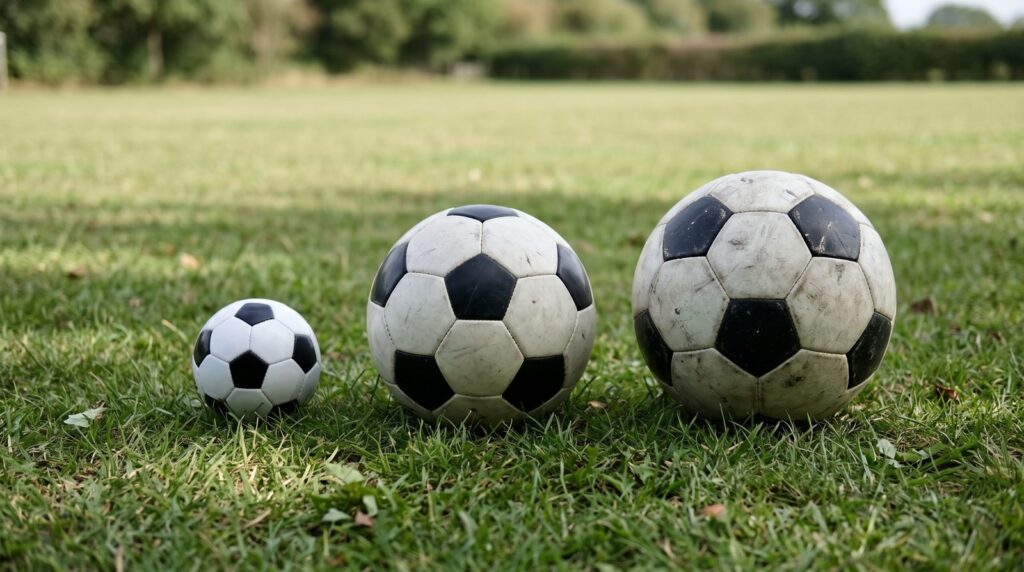
Ball size is one of those things that seems obvious until you actually play with the wrong one — a ball that’s too big or too small changes your touch more than people expect. I’ve played 7-a-side with a size 4 and standard matches with a size 5, and the difference is noticeable enough that it’s worth getting right, whether you’re buying for yourself or for a kid.
Soccer Ball Sizes by Age
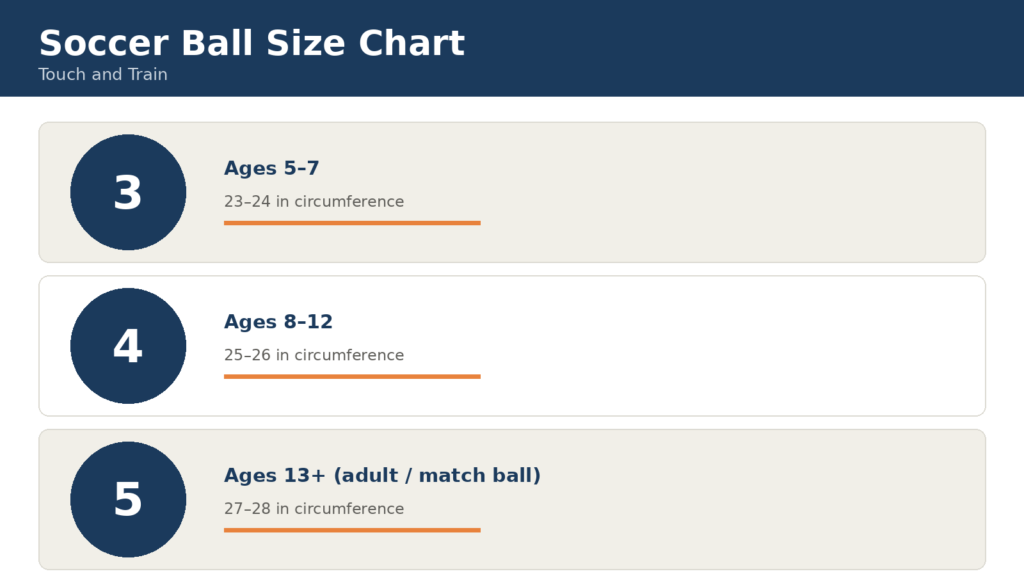
The sizing is based on age and matches the level most players are actually playing at:
- Size 3 — ages 5 to 7
- Size 4 — ages 8 to 12
- Size 5 — ages 13 and up, including all adult play
Size 5 is also the official match ball used in adult and professional play, so once you’re past 13, that’s the one you’ll use for real matches.
It’s Not Just About Age — Think About What You’re Playing
Age is the starting point, but what you’re actually playing matters too. I used a size 4 regularly when playing 7-a-side, even as an adult, since that format often uses a smaller ball than full 11-a-side. If you’re training or playing in a smaller format, it’s worth checking what ball that format typically uses rather than assuming size 5 is always correct.
For Solo Drills, Use the Ball You Actually Play With
If you’re doing solo drills — the kind covered elsewhere on this site, like toe taps, cone dribbling, or juggling — the general advice is to train with whatever size ball you actually use in matches. Training with a different size than you play with means building touch and timing around a ball that doesn’t match game conditions, which somewhat defeats the point of the practice.
Pressure Matters as Much as Size
This is a detail a lot of players overlook: a ball can be the right size and still feel wrong if it’s over- or under-inflated. FIFA’s guideline for a size 5 match ball is a pressure between 8.5 and 15.6 psi, and referees typically check this before a match. A ball that’s too soft feels sluggish and doesn’t travel properly on passes or shots; one that’s over-inflated feels harder to control and can sting more on header contact. If your ball feels “off” even though the size is correct, pressure is worth checking before assuming anything else is wrong.
Common Mistakes to Avoid
Buying based on age alone without checking the format. If you play a smaller-sided game, the standard size for your age might not match what your format actually uses.
Ignoring pressure. A correctly sized ball that’s poorly inflated can feel just as wrong as the wrong size entirely.
Training with a different ball than you play with. Solo practice builds more useful touch when it’s done with the same ball you’ll actually use in a match.
FAQ
What size ball do adults use?
Size 5, which is also the official match ball size for players 13 and up, including all professional and most amateur adult play.
Does the ball size matter for solo training, or can I use any ball?
It’s better to train with the size you actually play with, since solo drills are meant to build touch and timing that transfer to real games — a different-sized ball changes how it feels and behaves.
How do I know if my ball is properly inflated?
FIFA’s standard for a size 5 ball is 8.5 to 15.6 psi. If you don’t have a gauge, a simple check is pressing your thumb into the ball — it should feel firm with very little give, not soft or rock-hard.