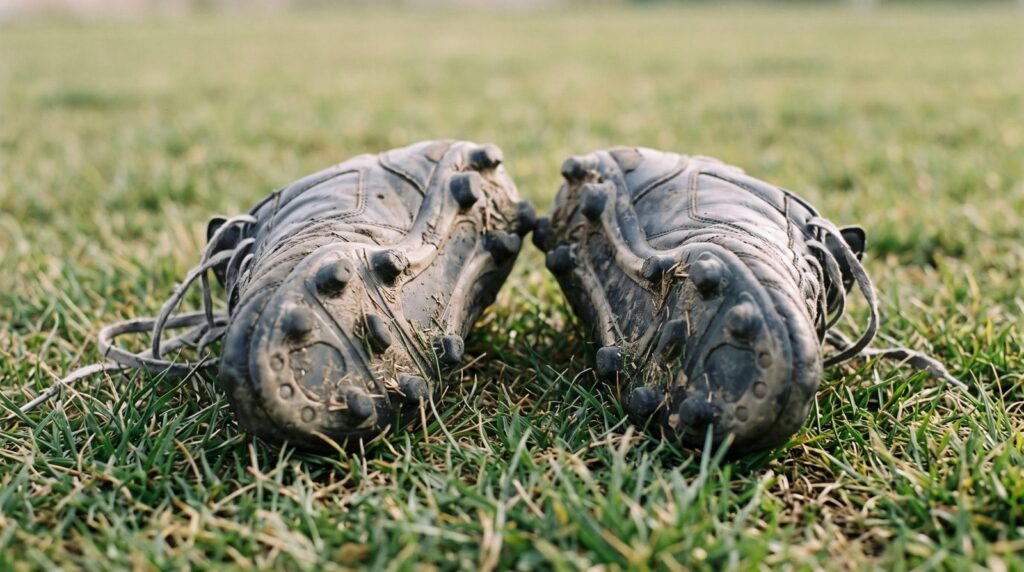
Picking cleats confuses a lot of beginners, and it’s usually not because the options are complicated — it’s because most players choose based on looks or price instead of the one thing that actually matters: the surface you’re playing on. I’ve played on natural grass, artificial turf, indoor courts, and the thin turf-carpet surfaces typical of 5-a-side, and the biggest differences I’ve noticed have never been about brand — they’ve been about matching the right studs to the ground.
Match Your Cleats to Your Surface, Not the Other Way Around
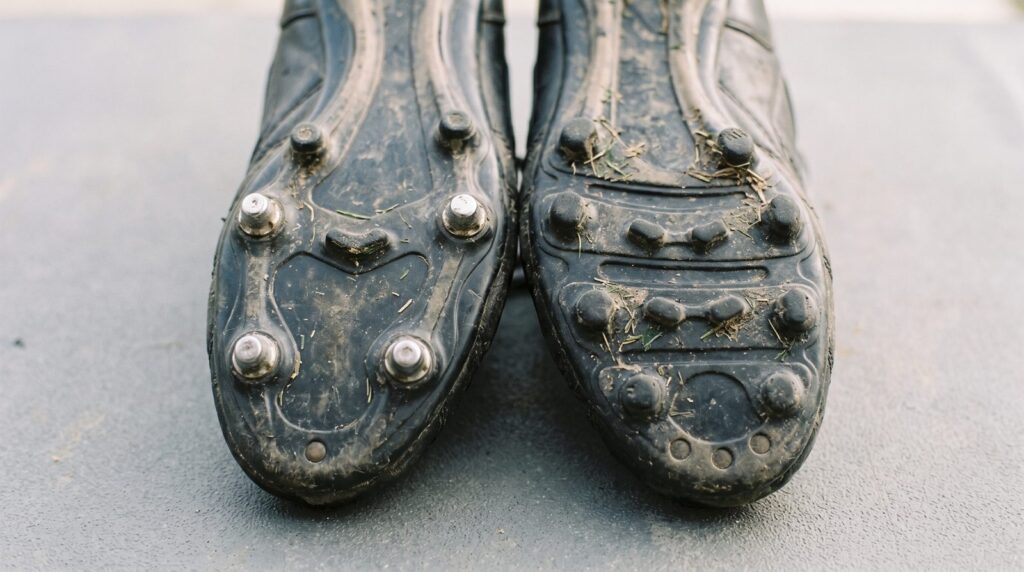
This is the single most important thing for a beginner to get right. Firm ground (FG) cleats, with longer, more spaced-out studs, are built for natural grass. Artificial ground (AG) cleats have shorter, denser studs made for synthetic turf. Turf (TF) and indoor (IC) shoes have flat or very short soles for the thin, carpet-like surfaces common in 5-a-side.
I’ve tested this the wrong way more than once — wearing artificial-turf studs on natural grass, and I noticed I was noticeably slower than usual, since the studs weren’t gripping the way they’re designed to. I’ve also played in futsal-style turf (the carpet-like surface typical of 5-a-side) with AG studs, and that combination left my legs far more fatigued than they should have been, since the studs weren’t built for that particular surface.
Think About Where the Load Goes, Not Just the Grip
It’s not only about traction — it’s also about how the stud pattern distributes pressure across your foot. I ended up with a bone bruise partly because of studs that put too much pressure on my heel area. Since then, I’ve switched to artificial-turf cleats with more studs specifically around the heel, which spreads that pressure out instead of concentrating it in one spot. If you’re a beginner, this isn’t something you’ll necessarily notice right away, but it’s worth paying attention to if a particular pair consistently leaves part of your foot sore.
Comfort Beats Price
This might go against what a lot of beginners assume, but in my experience, price hasn’t made a real difference. I’ve played in expensive cleats and standard-priced ones, and I genuinely can’t tell much of a difference on the field — if anything, the pricier ones might last a bit longer thanks to slightly better materials, but that’s about it. I now stick to mid-range cleats for that reason; they do the job just as well, and they’re easier on the wallet.
Brand Matters Less Than Fit
I had to stop wearing one well-known brand because it was too tight on my foot, and I’ve settled on a different one in the mid-to-low price range that fits me well. That said, I know plenty of players who swear by the exact brand that didn’t work for me — it’s not about which brand is “better,” it’s about which one matches your foot shape, since everyone’s feet are different.
If you’re not sure what works for you, the most reliable approach is to go to a sports store in person and try on a few different brands, ranges, and models before buying. It’s also worth knowing that cleat sizing often runs differently from your regular shoe size, so trying them on matters more than it might seem. Once you know your size and have a brand that fits, ordering online later is perfectly fine — but I’d still recommend trying before buying the first time.
How Long Should Cleats Last?
Mine usually last about half a season, but I play with a lot of explosive, sharp movements that wear them down faster than average — a different player with the same cleats might get a full season out of them. It also depends heavily on the surface and how often you play. Rather than going by a fixed number of months, watch for the actual signs: studs wearing down unevenly, the upper starting to separate, or noticeably less grip than when they were new.
Common Mistakes Beginners Make
Buying without considering your surface. Wrong studs for your field type can genuinely affect your performance and comfort, more than people expect.
Assuming expensive means better. Mid-range cleats perform the same for most players — the difference, if any, tends to be durability rather than performance.
Skipping the in-person try-on. Cleat sizing is often different from regular shoe sizing, and fit varies a lot by brand — trying a few on beats guessing from a size chart.
FAQ
Do I need different cleats for every surface I play on?
Not necessarily, but using the wrong stud type on a given surface can affect your grip and comfort. If you mostly play on one surface, get cleats suited to that one rather than trying to cover everything with a single pair.
Are expensive cleats worth it for a beginner?
Not really, based on my own experience. Mid-range cleats perform just as well for most players — the main advantage of pricier options tends to be slightly longer durability, not better performance.
How do I know what size to buy?
Cleat sizing often differs from your regular shoe size, and it varies between brands. If you’re buying your first pair, trying them on in a store is more reliable than guessing based on your usual size.